Mosquitoes carry two viruses that impact human health. Learn more about WNV (West Nile Virus) here. Learn more about EEE (Eastern Equine Encephalitis) here.
Climate change is expected to affect the geographic and seasonal patterns of mosquito-borne diseases in the United States. The northeast is experiencing an increase in precipitation and unusually hot temperatures. Since EEE is more prevalent in wetter years and WNV in hotter years the likeness of our area experiencing EEE and/or WNV events in any given year is possible, in some years both viruses can present substantial risk.
Weekly mosquito testing, residential spraying, and other mosquito mitigation measures will start May 2026. To request residential mosquito spraying click here starting May 31, 2026.
Public Parks, Fields, Buildings, and Facilities will under go Barrier Mosquito Treatment twice this summer: 1st treatment will be Monday, June 29, 2026 (Rain Date will be Tuesday 6/30). 2nd treatment will be Monday, August 17, 2026 (Rain Date will be Tuesday 8/18). For the full list of parks, fields and facilities that get treated and for more information on the type of treatment, click here.
What does the City of Revere do to help control the mosquito population?
RESIDENTIAL SPRAY TREATMENT REQUESTS CAN BE MADE HERE STARTING MAY 31, 2026!
Residents may request spray treatments for their own private property, through Northeast Mosquito, by completing a service request form at the button below from May 31st to September 16th. Requests can be made on a weekly basis from Sunday, 7:00 AM through Wednesday, 12:00 PM.
Why do I have to request spraying every week?
There’s a science-based reason behind it.
The adulticiding (spraying) service is designed to respond only when there's a noticeable mosquito problem. When residents in the same area submit multiple requests, it signals to our field technicians that something may be going on. We’ll then go out to investigate. Often, it turns out to be something simple—like standing water in a birdbath or bucket—that’s causing mosquitoes to breed nearby.
Why do I have to wait until Sunday to request spraying for next week? Why not just put me on the list now?
We understand this can feel inconvenient, but here’s why we do it: Spraying typically happens Thursday nights. Waiting until Sunday gives residents time to see if the treatment worked or if the issue is continuing and needs further investigation.
While the service is already provided at no cost to residents in our member communities, we ask that you don’t request treatment just because it’s available or “free.” Requests should be based on real mosquito activity so that we can accurately identify and respond to problem areas.
NEMMC is committed to responsible, science-based mosquito control that protects public health while minimizing unnecessary pesticide use.
What can you do to help reduce the risk from mosquito-borne illness?
Pick and always use a mosquito-repellant with an EPA/CDC approved active ingredient when outdoors
Use long sleeves to cover up whenever possible and repair screens in windows of homes
Avoid outdoor activity between the hours of dusk and dawn in elevated risk areas
Ticks
According to Centers for Disease Control and Prevention (CDC), the Northeastern U.S. sees higher levels of tick-associated diseases like Lyme disease, anaplasmosis, babesiosis, and Powassan virus disease. Because of this, Revere community members should know the signs and symptoms of common tick-borne diseases and how to prevent tick bites.
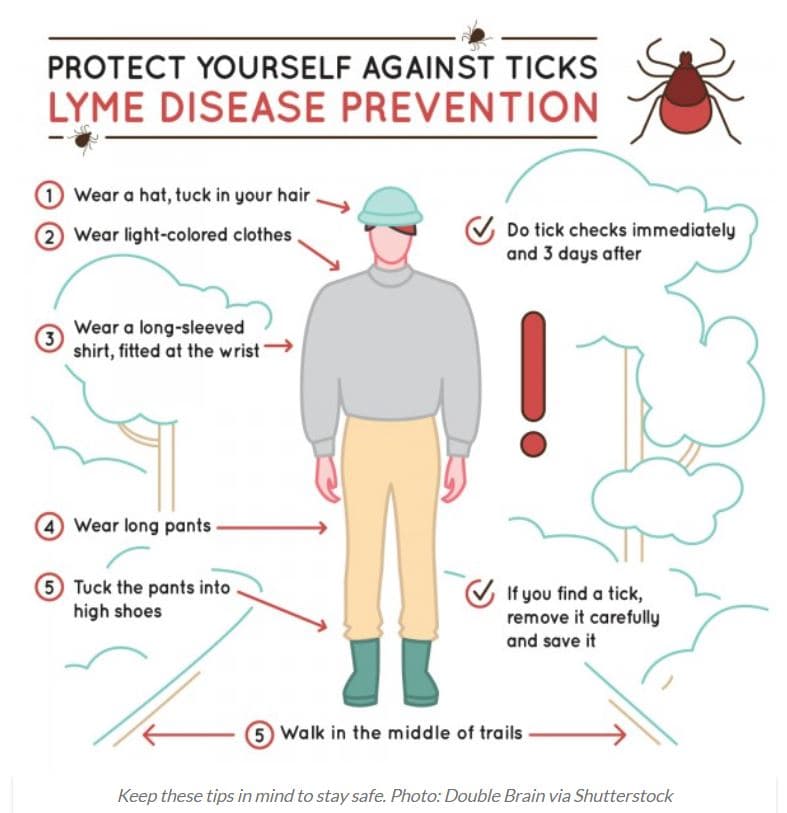
How do I protect myself and my family members from tick bites?
1. Make it a habit to check yourself, your children, and pets after coming inside especially from April to November. A tick check works best if you start low - legs, groin - and then move up to the waist band, torso, arms, armpits, the backs of the ears, and finally the scalp and hair.
2. Use repellents that contain DEET on your skin and treat your clothing and shoes with Permethrin. For more information about CDC-approved insect repellants, look here.
3. Wear light-colored clothing that fully covers your legs and arms. Tuck in loose ends (shirt into pants, pants into socks).
What are the signs and symptoms of Lyme disease?
1. One of the most common signs of Lyme disease is a round, oval or bull's eye shaped rash. It can be red in color or darker than your normal skin tone.
2. Other symptoms of Lyme disease are body aches, fever, headache, swollen or painful joints, or tingling in your hands or feet. You might feel like you have the flu.
What should I do if I find a tick on myself or my child?
1. Call you or your child's primary care provider for assistance.
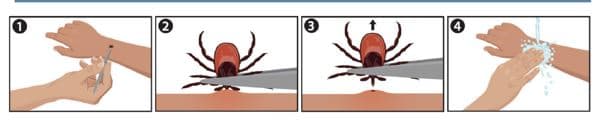
2. Use fine-tipped tweezers to grasp the tick as close to the skin's surface as possible and pull upward with steady, even force.
3. If the tick breaks in half, try to remove its mouth from the skin. If you can't leave it alone.
4. Thoroughly clean the bite area and your hands.
5. Monitor the bite area for several weeks. Call a doctor immediately if a rash develops or if you develop a fever at any point.